
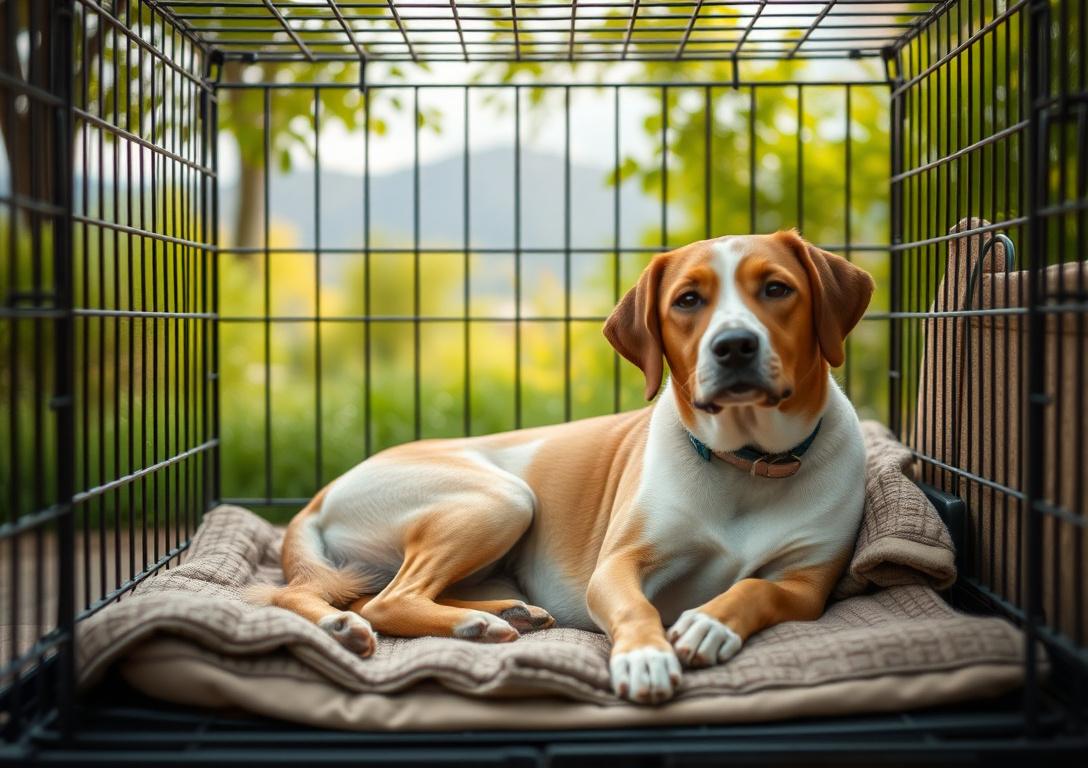
Crate Rest for Anxious Dogs: A Survival Guide to Keeping Your Pet Calm and Happy
Estimated reading time: 8 minutes
- Mental exertion through scent work and puzzles is as tiring as physical exercise.
- Use self-soothing behaviors like licking frozen toys to help your pet settle.
- Create a “den-like” environment with covers and white noise to reduce environmental triggers.
- Implement a “Protocol of Calm” by rewarding your dog for lying down quietly.
Understanding the Challenge: Why Crate Rest for Anxious Dogs is Difficult
Crate rest is a standard veterinary recommendation for healing injuries or post-surgical recovery, but it is rarely easy. Dogs are naturally active, and when we remove their ability to engage in their regular outdoor routine, their energy needs a new outlet. Without one, that energy often turns into confinement anxiety, which manifests as frustration, excessive barking, or even self-injury as the dog struggles against their limitations.
For owners of high-energy breeds or dogs already prone to anxiety, this period is especially taxing. You might see your dog pacing, panting, or showing signs of distress. However, it is vital to remember that restriction is necessary for their body to mend. The key to success lies in understanding the science of mental exertion and keeping dog calm after surgery through structured engagement.
Practical Solutions: Mental Enrichment for Dogs on Bed Rest
When your dog cannot move freely, your primary goal is to provide mental stimulation for injured dogs. Since physical movement must be minimized, you should focus on “static” brain games that challenge the mind without requiring jumping, running, or twisting.
1. Utilizing Sniff Mats and Scent Work
Sniff mats (or snuffle mats) are one of the most essential tools for crate rest for anxious dogs. These mats tap into a dog’s natural foraging instincts, which is an incredibly soothing activity for them.
2. The Power of Licking: Frozen Kongs and Toppls
Licking is a self-soothing behavior for dogs that releases endorphins, helping them remain calm for long periods. A frozen treat toy is a staple of how to calm an anxious dog after surgery.
Managing the Environment: Creating a Den of Calm
Beyond activity, the environment plays a huge role in treating dog anxiety during recovery. If your dog is anxious about being trapped, you need to turn the crate into a safe, den-like space using visual barriers or pheromones. If you are struggling with dog excessive barking, remember that masking household noises with calming music is an effective, non-invasive strategy.
When to Consult Your Veterinarian
Sometimes, a dog’s anxiety can become an obstacle to their physical health. If your dog is too anxious to settle, they could accidentally reopen a surgical site. In these cases, do not hesitate to contact your veterinarian about short-term sedatives. For more information on when to call the vet, check out the Veterinary Partner’s resources on post-operative care.
Frequently Asked Questions
How do I stop my dog from pacing in their crate?
Pacing is a sign of confinement anxiety. Try using a crate cover to reduce visual stimuli and provide a long-lasting licking toy to shift their focus from restlessness to self-soothing.
Can I give my dog chews during crate rest?
Yes, as long as the chews are low-impact. Avoid items that encourage your dog to stand up or toss their head. Always supervise your dog to ensure they don’t choke while lying down.
What should I do if my dog is whining constantly?
Whining is often a cry for engagement. Ensure their needs are met, then try the “Protocol of Calm”—reward them only when there is a moment of silence. For more comprehensive behavioral support, visit our guide on nutrition and supplements.
Disclaimer: The information provided in this article is for educational purposes only. Always consult your veterinarian before starting any new training or enrichment program.