
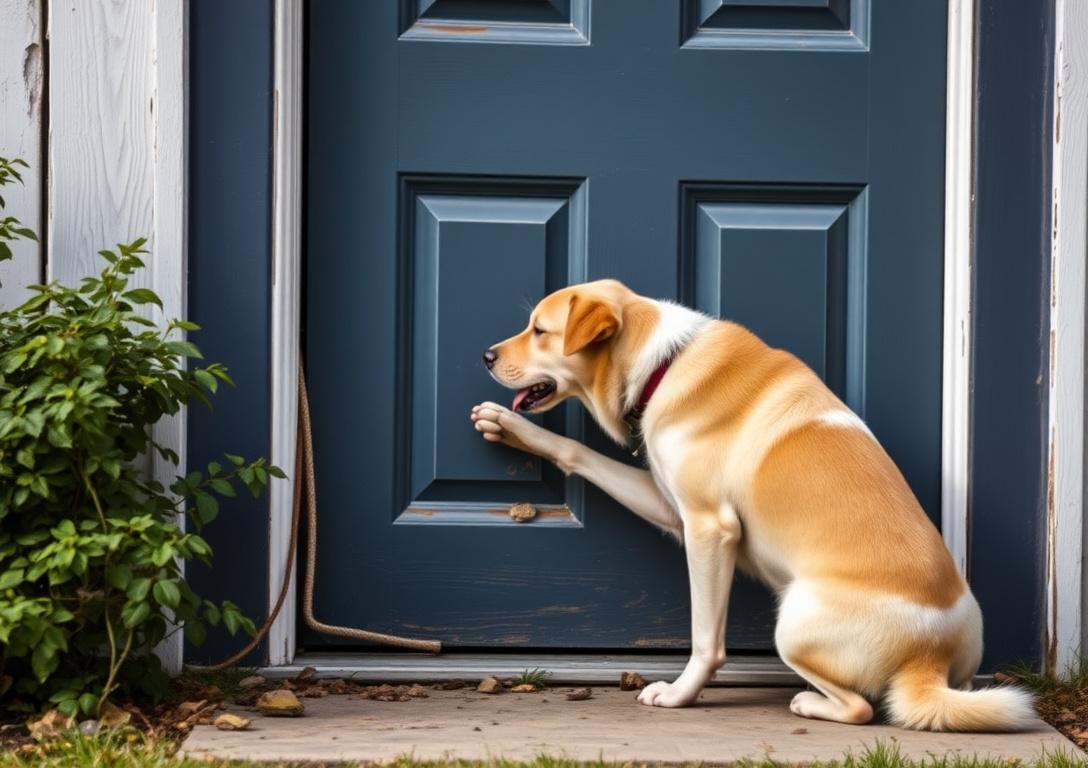
Why Your Dog is Destroying the Door When Left Alone: Practical Solutions for Exit Seeking Behavior
Estimated Reading Time: 7 minutes
Key Takeaways:
- Exit seeking is a clinical manifestation of panic, not a result of boredom or spite.
- Destruction typically occurs within the first 15–30 minutes of departure during a cortisol spike.
- Success requires desensitizing departure cues and implementing gradual departures.
- Physical protection, such as polycarbonate sheets, prevents property damage while working on long-term behavior modification.
- Punishment is counterproductive and increases the dog’s overall anxiety levels.
Coming home after a long day at work should be a moment of joy and relaxation. However, for many pet parents across the USA, that front door reveals a scene of destruction: shredded wood, gouged drywall, and a trembling, panting dog. If you are dealing with a dog destroying door when left alone, you aren’t just dealing with a “naughty” pet; you are witnessing a clinical manifestation of panic known as “exit seeking” behavior.
At chilldogzone.com, we understand that a dog destroying door when left alone can be incredibly isolating and expensive. We specialize in providing practical, compassionate solutions for dog anxiety because we know that a calm dog leads to a happy home. This guide will dive deep into why your dog is targeting your exits, how to protect your property, and most importantly, how to help your furry friend find peace when you aren’t there.
Understanding the Root Cause: It’s Not Spite, It’s “Exit Seeking”
The first thing every owner must understand is that a dog destroying door when left alone is rarely acting out of boredom or spite. According to clinical research, this behavior is a hallmark of Separation Anxiety (SA). In the veterinary world, this type of separation anxiety destruction is specifically categorized as “Exit Seeking” behavior.
To a dog in a state of high-intensity panic, the door is the only thing standing between them and their “safety person”—you. Because dogs are digitigrade (meaning they use their paws and claws to communicate and navigate their world), their instinctual response to a barrier is to dig or claw through it. Dealing with a dog destroying door when left alone means recognizing they aren’t trying to ruin your expensive mahogany door; they are trying to reach safety.
The Panic Window and Physical Risks
Research into canine behavior shows that most door destruction occurs within the first 15–30 minutes of the owner leaving. This is when the cortisol spike—the body’s primary stress hormone—is at its highest. During this “panic window,” the dog is in a fight-or-flight state.
Severe separation anxiety destruction isn’t just hard on your house; it’s dangerous for the dog. “Exit seeking” can lead to:
- Torn and bleeding nails.
- Broken teeth (especially if they are chewing on metal frames or door handles).
- Lacerations on the paws or snout.
Behavior Modification: Stopping the Panic at the Threshold
Solving the issue of a dog destroying door when left alone requires more than just a sturdy lock. You must change the dog’s emotional response to the door itself. Here is how to implement a low-stress behavior modification plan.
1. Desensitization to Departure Cues
Many dogs with dog anxiety begin to spiral before you even leave the house. They recognize your “departure cues”—the sound of your keys, the sight of you putting on your shoes, or the smell of your perfume.
To break this cycle and prevent a dog destroying door when left alone, practice “fake departures.” Throughout the day, pick up your keys and then sit down to watch TV. Put on your coat, then go into the kitchen to make coffee. By uncoupling these triggers from the act of leaving, you lower the dog’s baseline anxiety before you even reach the door.
2. Graduated Departures
Once your dog is calm during your “fake cues,” start practicing graduated departures. This involves stepping outside the door for a duration so short the dog doesn’t have time to panic.
- Step 1: Step outside for 5 seconds and return.
- Step 2: Increase to 15 seconds, then 30.
- Step 3: Gradually build up to several minutes over the course of weeks.
The goal is to return before the dog reaches the “panic window.” If you return to a dog scratching door frame surfaces, you have moved too fast.
3. Counter-Conditioning
Counter-conditioning is the process of changing a negative association into a positive one. You want your dog to think: “When the human goes to the door, I get something amazing.”
Provide a high-value, long-lasting treat—such as a frozen Kong filled with peanut butter or a specialized nutrition & supplement chew—only when you are near the door or just as you leave. This engages the dog’s brain in a “seeking” or “eating” mode, which is neurologically incompatible with a “panic” mode.
4. The Protocol for Relaxation
Teaching a “place” command is vital for dog behavior problems related to “velcro dog” tendencies. By training your dog to stay on a specific mat or bed away from the door, you reduce their hyper-focus on the threshold. This builds their “independence muscle” and helps lower the intensity of their focus on the exit.
Immediate Management and Property Protection
Protecting your property from a dog destroying door when left alone is a priority while you work on long-term training. Behavior modification takes time—often months. In the meantime, you need to protect your home and ensure your dog’s safety.
Physical Barriers
- Scratch Guards: We highly recommend heavy-duty polycarbonate sheets, such as ClawGuard. These clear shields are applied directly to the door. Because they are slick, a dog’s claws cannot get a “grip” on the wood. Without the tactile feedback of digging, many dogs eventually stop the motion.
- Door Kick Plates: If you have a large dog breed with significant power, a metal kick plate installed at the base of the door can prevent wood splintering and drywall damage.
Pheromones and Calming Aids
To “take the edge off” during the initial departure, consider using synthetic pheromones. Adaptil mimics the pheromones a mother dog releases to calm her puppies. Using an Adaptil diffuser near the entryway can create a “calm zone” around the door.
Additionally, consult with a professional about nutrition & supplements containing L-theanine or melatonin. These can be particularly helpful for small dog breeds or puppy behavior issues where the anxiety is just beginning to manifest.
Practical Repair Tips for Owners: Fixing the Damage
If your dog destroying door when left alone, you likely have some DIY work ahead of you. If you find your dog scratching door frame areas, the damage can range from surface marks to structural compromise.
Repairing Wood Scratches and Gouges
- Shallow Scratches: For minor aesthetic damage, use wood stain markers or “Fil-Stik” crayons that match your door’s finish.
- Deep Gouges: If the dog has chewed into the wood, causing a deep dog scratching door frame issue, use a high-performance wood filler like Minwax High Performance Wood Filler or Bondo. These products harden significantly more than standard wood putty, making the area less enticing to chew in the future.
Fixing Drywall and Trim
If the dog has moved past the door and is attacking the molding or the wall next to it, consider the material you use for repairs.
- PVC or Metal Molding: Instead of replacing damaged wood with soft pine (which is very “satisfying” for a dog to crunch), replace it with PVC or metal trim.
- Solid-Core Doors: If your dog has actually “punched through” a hollow-core door, replace it with a solid-core wood or metal door. These are much heavier and provide a significant deterrent.
Breed-Specific Considerations in Anxiety
- Large Dog Breeds: Breeds like German Shepherds or Labradors can do massive structural damage in minutes. For these dogs, heavy-duty metal guards are a necessity.
- Small Dog Breeds: Terriers or Chihuahuas often focus on “digging” at the carpet or the gap under the door. A “door sweep” or a heavy floor mat can protect the flooring.
- Senior Dog Behavior: Sometimes, a senior dog who never had issues suddenly begins dog excessive barking or door destruction. This can be related to Canine Cognitive Dysfunction (dementia).
The Most Important Rule: Avoid Punishment
“It is vital to state: Do not scold or punish your dog when you come home to a destroyed door.”
When you punish a dog for something they did 20 minutes ago, they do not associate the punishment with the act of chewing the door. Instead, they associate your arrival with fear. This increases the dog’s overall anxiety levels, making the “exit seeking” behavior even worse the next time you leave because they are now anxious about both your absence and your return.
Actionable Takeaways for Pet Owners
- Identify the Window: Set up a pet camera (like Furbo or Wyze) to see exactly when the destruction starts.
- Protect the Surface: Install a polycarbonate scratch guard immediately to mitigate separation anxiety destruction while training.
- Desensitize Departure: Spend 10 minutes a day “faking” your departure rituals.
- Use Calming Support: Implement pheromone diffusers and high-value treats near the door.
- Consult a Professional: If the dog destroying door when left alone behavior continues, seek help from a Certified Applied Animal Behaviorist (CAAB) or a Veterinary Behaviorist.
Conclusion
Dealing with a dog destroying door when left alone is an exhausting and emotional challenge. It tests your patience and your wallet. But remember, your dog isn’t trying to give you a hard time; they are having a hard time.
By focusing on the root cause—the “Exit Seeking” panic—and utilizing the practical management and repair tips outlined here, you can reclaim your home and help your dog feel safe. A dog destroying door when left alone is a sign they need help, and at chilldogzone.com, we are committed to helping you navigate dog anxiety with science-backed, compassionate solutions.
Frequently Asked Questions (FAQ)
Why does my dog only scratch the door when I leave, not when I am in the other room?
This is a classic sign of separation anxiety rather than general barrier frustration. Your presence in the house acts as a “safety signal.” When you leave, the dog loses that safety and enters a state of panic, targeting the door as the last obstacle between them and you.
Should I put my dog in a crate to stop them from destroying the door?
Only if your dog is already comfortably crate trained. If a dog with severe separation anxiety is suddenly locked in a crate, they may shift their “exit seeking” behavior to the crate, leading to broken teeth or “confinement distress,” which can be even more dangerous than door scratching.
How long does it take to stop a dog from destroying the door?
Behavior modification is a marathon, not a sprint. Depending on the severity of the anxiety, it can take anywhere from a few weeks to several months of consistent graduated departure training to see significant results.
Can I fix deep gouges in my door frame without replacing the whole thing?
Yes. Using a high-performance wood filler like Minwax High Performance Wood Filler allows you to fill deep holes. Once it hardens, it can be sanded and painted to look like new, and it is often harder than the original wood.
Sources for further reading and research:
- American Veterinary Medical Association (AVMA) on Separation Anxiety
- VCA Hospitals: Behavior Counseling – Separation Anxiety in Dogs
- The Protocol for Relaxation by Dr. Karen Overall
- ClawGuard Protective Sheets: ClawGuard.com