
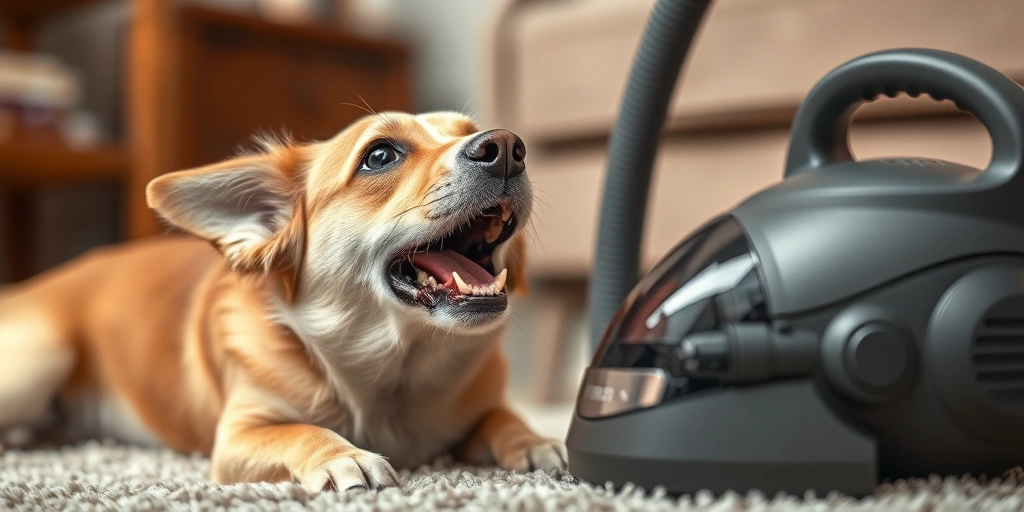
Dog Scared of Vacuum Cleaner? Why the Whine Triggers Extreme Responses and How to Use the ‘Treat and Retreat’ Method
Estimated reading time: 9 minutes
Key Takeaways
- The vacuum’s high-frequency whine is perceived by dogs up to 45 kHz, making the noise physically piercing and significantly louder than what humans experience, instantly triggering the “fight or flight” response.
- Canine reactions fall into two categories: Fear and Avoidance (Flight, characterized by hiding/shaking) or Predatory/Aggressive Engagement (Fight/Chase, characterized by barking/lunging).
- The recommended solution is the “Treat and Retreat” method, a systematic desensitization and counter-conditioning protocol.
- Success depends entirely on working *below* the dog’s emotional threshold, pairing the noise (even if barely audible) with high-value rewards, and retreating immediately if any stress signals appear.
- Holistic support, including calming supplements and addressing generalized anxiety, is often necessary for dogs struggling with severe environmental fears.
If the sight of your vacuum cleaner sends your beloved canine into a spiral of shaking, frantic barking, or outright panic, you are not alone. For millions of dog owners across the USA, vacuum day is a recurring battleground defined by noise, stress, and overwhelming Dog Anxiety. This requires effective Noise Phobia in Dogs strategies. The high-pitched whine of the motor can instantly transform a peaceful home into a terror zone, resulting in classic Dog Behavior Problems ranging from hiding under the bed to aggressive lunging.
At Chill Dog Zone, we understand that addressing these intense reactions requires more than just masking the problem; it requires understanding the science of canine acoustics and employing practical, compassionate solutions. Our expert guide is focused on giving you the tools to help your dog scared of vacuum cleaner genuinely overcome this powerful environmental fear. We are going to delve into why the vacuum is perceived as such a catastrophic threat and provide a detailed, step-by-step Canine Behavior Modification protocol—the highly effective “Treat and Retreat” method—that promises lasting relief.
Understanding the Anxiety Triggers: Why the Vacuum Sounds Like the End of the World to Your Dog
To human ears, a vacuum is merely a household appliance—a loud but necessary device. To a dog scared of vacuum cleaner, it is a mobile source of unpredictable, high-frequency acoustic assault. The vacuum is arguably one of the most common and intense Anxiety Triggers found in the home environment, and this hyper-reaction is deeply rooted in canine physiology.
The Problem of Canine Auditory Superiority
The overwhelming response for a dog scared of vacuum cleaner is due to the vast difference between human and canine hearing. The sound we perceive is only a fraction of what our dogs experience.
1. Frequency Overload and Perception of Pitch:
While human hearing peaks around 20,000 Hz, dogs possess a far superior auditory range, capable of hearing frequencies up to approximately 45,000 Hz (45 kHz) [Source: Canine Auditory Science]. This means that the high-frequency components of the vacuum—the irritating whine created by the motor—are heard by your dog in a way that is physically piercing and far more intense than what you experience. Research indicates that the specific high-frequency pitch often peaks between 2,000 Hz and 8,000 Hz, making it exceptionally jarring for sensitive canine ears [Source: Acoustic Stress Research].
2. Decibel Levels and Amplified Volume:
A standard residential vacuum operates at around 70–80 dB (decibels) [Source: Environmental Noise Standards]. While this volume is considered safe for humans, when combined with their heightened frequency detection, the noise is perceived by dogs as significantly louder. This immediate acoustic overload often pushes the dog scared of vacuum cleaner straight over their emotional threshold, bypassing calm thought and instantly triggering the sympathetic nervous system—the classic “fight or flight” response.
The Startle Reflex and Sensory Chaos
Beyond the sheer volume and pitch, the vacuum presents three critical elements that contribute to generalized anxiety for a dog scared of vacuum cleaner:
- Suddenness: Vacuuming is typically an abrupt intrusion. It starts suddenly and loudly, activating the primal startle reflex. When something loud and unexpected appears, the dog’s nervous system is primed for danger.
- Erratic Movement: The machine moves rapidly, often changing direction without warning, and sometimes bumps into walls or furniture. This erratic movement combines with vibration to create sensory overload, making the “threat” unpredictable and escalating the dog’s fear response [Source: Behavioral Veterinary Medicine].
- Inconsistent Noise: The sound shifts and changes depending on what the vacuum is sucking up or the surface it is on. This inconsistent pattern heightens the tension, as the dog cannot predict the threat’s behavior.
Decoding the Behavior: Fear vs. Predatory Drive
When a dog scared of vacuum cleaner is confronted with the vacuum, their reaction generally falls into one of two categories, both rooted in survival mechanisms. Understanding which mechanism is at play is crucial for selecting the right approach to Anxiety Treatments & Remedies, which often involves specialized Environmental Fear Training.
Type 1: Fear and Avoidance (The Flight Response)
This is the most common manifestation of vacuum anxiety. The dog perceives the machine as an overwhelming, un-fightable threat and seeks withdrawal or safety.
Behaviors Observed:
- Hiding (under furniture, in a crate, or behind the owner’s legs).
- Excessive panting, yawning, or drooling (stress signals).
- Shaking, trembling, or becoming physically rigid.
- Submissive urination or evacuation (extreme panic).
- Lip-licking, pinned ears, or “whale eye” (showing the whites of the eyes).
In these cases, the dog’s internal wiring is screaming, “Flee! Get away from the noise!”
Type 2: Predatory and Aggressive Engagement (The Fight/Chase Response)
Some dogs, particularly those with strong inherent herding or prey drives, respond to the moving machine by attempting to “neutralize” it. The low-to-the-ground, noisy, erratic motion mimics a fleeing animal, triggering the full predatory sequence (stalk, chase, grab).
Behaviors Observed:
- Dog Excessive Barking directed specifically at the machine.
- Lunging, nipping, or biting at the hose, cord, or base of the vacuum.
- Attempting to “herd” the machine into a corner.
- Low growls, rigid posture, and focused attention.
These dogs are not necessarily aggressive in general; they are exhibiting a misplaced prey drive aimed at the perceived intruder. Understanding this distinction is key to successful training, as both reactions are classified as severe Dog Behavior Problems requiring intervention.
The Ultimate Solution: Treat and Retreat (Systematic Desensitization)
The most effective, expert-recommended approach to overcoming a severe fear like vacuum anxiety is through a structured behavior modification technique known as Systematic Desensitization and Counter-Conditioning (SD/CC). We refer to this practical application as the “Treat and Retreat” method.
This method works by changing the dog scared of vacuum cleaner’s emotional association with the vacuum. Instead of noise = terror, the goal is to make noise = delicious food. This process must be done gradually, ensuring the dog remains below their emotional threshold at all times.
Phase 1: Preparation and Baseline Assessment
1. Identify High-Value Rewards (The “Treat” Rule):
Forget kibble. You need rewards so incredible that they compete with the dog’s internal panic signal. Use the absolute highest-value items, such as small pieces of cheese, boiled chicken, liver paste, or hot dogs. These treats should only be used for vacuum training. Identify High-Value Rewards for your dog scared of vacuum cleaner.
2. Establish the Threshold (The “Retreat” Rule):
Identify the precise distance or volume at which your dog notices the vacuum but shows no signs of fear or arousal (no tension, no whale eye, no lip-licking). This is your starting point. If the dog reacts, you are already too close, and you must immediately retreat to an easier distance.
3. The Vacuum as a “Muggle Object”:
For several days, place the vacuum quietly in the living space. Do not use it or move it. Simply reward your dog for being near the stationary machine while calm. This normalizes the vacuum’s presence before the sound is introduced.
Phase 2: Introducing the Sound with Distance Control
This phase is the core of the counter-conditioning process for a dog scared of vacuum cleaner. It establishes the positive association.
- A. Sound Placement: Place the vacuum in a distant room (e.g., the garage, basement, or a closed closet) so that the sound is barely, barely audible to your dog—just a faint hum.
- B. Simultaneous Pairing: The instant the vacuum turns on, begin feeding the high-value rewards continuously (rapid-fire treats). The timing is critical: the positive stimulus (treats) must predict the negative stimulus (noise).
- C. The Retreat: The instant the vacuum turns off, stop feeding the treats. This clear, concise association reinforces the idea: Vacuum noise = delicious food; silence = training is over.
- D. Session Duration: Keep these sessions very short (2–5 minutes). Repeat this pairing 3–5 times per day at the same low volume until your dog shows anticipation (e.g., looking excitedly for the food) instead of stress when the sound begins.
Phase 3: Gradual Desensitization (Closing the Distance)
Once the dog is relaxed at the initial distance, a dog scared of vacuum cleaner can slowly begin to increase the challenge.
- Incrementally Increase Volume/Proximity: If using a physical vacuum, move it 1–2 feet closer to your dog’s location. If using a recording, slightly increase the volume.
- Check for Stress Signals: If your dog shows any signs of anxiety—even a stiff tail or hard stare—you have moved too fast. Stop the session immediately and retreat to the last distance/volume where the dog was completely calm.
- Increase Duration: Gradually extend the length of time the vacuum runs, ensuring the steady stream of rewards continues throughout the entire run time.
Phase 4: Introducing Movement and Handler Interaction
The final phases integrate the movement component that is so frightening to the dog scared of vacuum cleaner.
- Slight Movement: Once the dog is calm with the stationary, running vacuum, introduce tiny movements (e.g., rolling it 6 inches and back). Reward heavily during the movement.
- Full, Distant Vacuuming: Start vacuuming normally, but keep the initial distance significant (e.g., start across the room while the dog is happily munching on their treats).
- Handler Demeanor: Maintain a calm, neutral, or even slightly happy demeanor. Avoid soothing, sympathetic language (“It’s okay, buddy”), as this often unintentionally rewards the dog’s state of fear. Your calm behavior demonstrates to the dog that the environment is safe.
Crucial Takeaway: This process is non-linear and requires immense patience for the dog scared of vacuum cleaner. It may take several weeks or even months to reach the point where you can vacuum around your dog without incident. Consistency is the key to restructuring this deep-seated emotional association. Never force the dog or use punishment; this will only intensify the fear and undermine your training efforts.
Holistic Support: Addressing Vacuum Fear in Broader Contexts
Severe environmental anxiety often reflects a broader propensity for stress for a dog scared of vacuum cleaner. As experts in Dog Anxiety and behavior, we know that addressing one trigger often requires supporting the dog’s overall emotional resilience.
Supporting Behavior with Nutrition & Supplements
While training is paramount, supportive measures can help keep your dog’s nervous system relaxed enough to learn. If your dog is struggling severely with the vacuum, consider adding vet-approved support:
- Calming Supplements: Ingredients like L-Theanine (found in green tea), caseinate hydrolysate (Zylkene), and certain probiotic strains have shown efficacy in reducing generalized anxiety and improving cognitive focus during training [Source: Veterinary Journal of Behavior].
- Essential Fatty Acids: Omega-3s (DHA/EPA) support overall brain and nerve health, which can improve stress coping mechanisms. These can be vital parts of comprehensive Noise Phobia in Dogs treatment.
Consult your veterinarian before starting any new Nutrition & Supplements regimen.
Connecting Vacuum Fear to Other Behavior Problems
If your dog scared of vacuum cleaner displays significant distress when the vacuum appears, it is likely they struggle with other auditory or environmental stressors. Generalized anxiety can manifest in various Dog Behavior Problems:
- Excessive Barking: A dog who barks intensely at the vacuum may also exhibit Dog Excessive Barking at doorbells, sirens, or neighborhood activity.
- Outdoor Anxiety: If household noise is challenging, environmental sounds like traffic, construction, or storms can cause Dog Outdoor Anxiety. The same SD/CC principles used for the vacuum can be applied to these triggers.
- Unwanted Attention Seeking: Dogs prone to anxiety may also exhibit displacement behaviors like attention-seeking or Jumping on People when over-aroused or nervous in a stimulating environment.
Age and Breed Considerations
Vacuum anxiety affects dogs of all sizes and ages, but the approach for a dog scared of vacuum cleaner may need slight tailoring:
Puppy Behavior Issues
Puppies need early, positive exposure to novel sounds and objects. If you have a puppy, introduce the quiet vacuum immediately, followed by low-volume noise, paired with fun and play. Addressing Puppy Behavior Issues early prevents the anxiety from cementing.
Senior Dog Behavior
Many older dogs develop new fears later in life. Senior Dog Behavior changes, often including increased sensitivity to noise, may be linked to declining eyesight or hearing loss, which makes the remaining senses (like frequency detection) feel overwhelming. Be extra gentle and proceed at a slower pace.
Large Dog Breeds Anxiety vs. Small Dog Breeds Anxiety
- Large Dog Breeds Anxiety (like German Shepherds or Labs) often manifests as the “fight” response—chasing, lunging, and potential damage to the machine. Management must prioritize safety during training for the dog scared of vacuum cleaner.
- Small Dog Breeds Anxiety often manifests as the “flight” response—shaking, hiding, and submissive behaviors. For these dogs, ensuring they have a secure, safe space away from the immediate noise source is critical for their psychological well-being.
Conclusion: Empowering Your Dog to Chill
A dog scared of vacuum cleaner is not being difficult or stubborn; they are having a genuine physiological response to a perceived threat. The path to relief lies in compassionate, evidence-based training.
The “Treat and Retreat” method, built on systematic desensitization and classical counter-conditioning, is your roadmap to transforming that terrifying whine into a positive cue. This type of intensive Canine Behavior Modification is essential for deeply ingrained fears. By patiently working below your dog’s threshold, using irresistible rewards, and refusing to rush the process, you are building a new, resilient emotional framework for your dog scared of vacuum cleaner.
At Chill Dog Zone, we are committed to providing practical solutions for all aspects of Dog Behavior Problems. If vacuum anxiety is just one piece of a larger puzzle, remember that consistency, coupled with holistic support like appropriate Nutrition & Supplements, can help your dog scared of vacuum cleaner lead a calmer, happier life. Start slow today—your chill dog zone is just a few feet (and a lot of treats) away.
Frequently Asked Questions (FAQ)
Why is the vacuum sound so distressing to dogs?
Dogs have an auditory range far superior to humans, hearing frequencies up to 45 kHz. The high-pitched whine of the vacuum’s motor (often peaking between 2,000 Hz and 8,000 Hz) combined with the standard decibel level makes the noise physically piercing and overwhelmingly loud to their sensitive ears.
What are the two main types of reactions to the vacuum?
The reactions are categorized as either the Flight Response (Fear and Avoidance, characterized by hiding, shaking, and trembling) or the Fight/Chase Response (Predatory/Aggressive Engagement, characterized by lunging, intense barking, and attempting to bite the machine).
How does the “Treat and Retreat” method work?
This method uses Systematic Desensitization and Counter-Conditioning (SD/CC). It works by changing the dog’s emotional association: Vacuum noise = high-value reward. Training involves introducing the sound at a distance where the dog shows zero stress (the ‘Retreat’ rule) and pairing the sound instantly with continuous high-value treats (the ‘Treat’ rule). Training stops the moment the vacuum turns off.
How long will it take to train my dog out of this fear?
Consistency and patience are vital. Because vacuum fear is a deep-seated emotional reaction, the process is often non-linear and can take several weeks or months. Progress is dictated by ensuring the dog remains calm and below their emotional threshold during every single training session.