
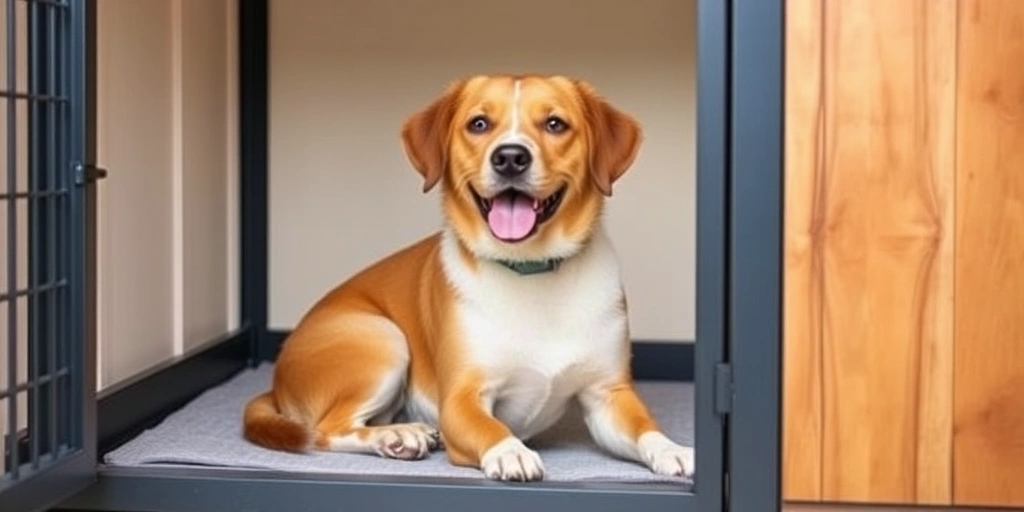
The Ultimate Guide to Building a Soundproof Dog Crate DIY for Noise-Sensitive Dogs Dealing with Dog Anxiety: Solutions That Truly Work
Estimated Reading Time: 8 Minutes
Key Takeaways
- Safety First: Active, baffled ventilation and temperature monitoring are non-negotiable requirements for any sealed, soundproof dog enclosure to prevent overheating.
- The Science of Silence: Effective soundproofing relies on the “Crate-Within-a-Crate” model, utilizing high Mass (e.g., MDF, MLV) and Decoupling (an air gap) to stop low-frequency vibrations.
- Critical Materials: The highest impact components are 3/4-inch MDF/Plywood, 1 lb Mass Loaded Vinyl (MLV), and generous use of Acoustic Caulk to seal all seams.
- The Sealing Imperative: A 1% gap in the enclosure can compromise up to 50% of the acoustic performance. Caulk and high-quality weather stripping are essential for airtight sealing.
- Holistic Approach: The physical barrier should be supported by positive conditioning, white/brown noise integration, and veterinarian-approved nutritional/supplement support for managing severe Dog Anxiety.
Addressing Noise Trauma: Why a Soundproof Dog Crate DIY is the Ultimate Solution for Severe Dog Anxiety
If you are a loving dog owner in the USA, chances are you dread the Fourth of July, severe summer thunderstorms, or even the sound of neighborhood construction. For millions of dogs, these events are not just inconvenient—they are genuine Anxiety Triggers that lead to intense panic, fear, and disruptive Dog Behavior Problems caused by Dog Anxiety.
While standard wire or plastic crates are useful for training and containment, they offer virtually no acoustic protection against high-decibel events that can exceed 100 dB. When your dog experiences extreme sound sensitivity, common signs include pacing, trembling, panting, destructive chewing, and sometimes Excessive Barking or frantic attempts to escape, resulting from high levels of Dog Anxiety. These issues are often intensified when dealing with early-onset Puppy Behavior Issues. Providing a safe, acoustically modified sanctuary is the most practical, compassionate solution you can offer.
At Chill Dog Zone, we specialize in providing actionable Anxiety Treatments & Remedies for Dog Anxiety. Our focus today is on constructing a highly effective, yet accessible, soundproof dog crate DIY enclosure. This strategy moves beyond simple behavioral adjustments and offers physical protection from the outside world, drastically reducing the intensity of these triggers.
This comprehensive guide will detail the exact materials, safety requirements, and step-by-step instructions needed to create a safe, high-mass enclosure—a true haven for your noise-sensitive dogs suffering from Dog Anxiety.
I. Critical Safety Pre-Requisite: Airflow and Temperature Control
Before we delve into the world of Mass Loaded Vinyl and acoustic caulk, we must address the single most critical safety concern when building a sealed enclosure: ventilation and temperature control.
The effectiveness of soundproofing relies on creating a sealed, high-mass box. Unfortunately, sealing in sound also seals in heat and restricts airflow. The biggest risk of this DIY project is overheating and inadequate air supply.
Active Ventilation is Non-Negotiable
Relying on passive ventilation (small holes) is insufficient when using high-mass materials. Your design must incorporate robust, active airflow management:
- Baffled Ventilation Shafts: To prevent sound leaks, the air ducts cannot run straight through the enclosure wall. You must create S-shaped or baffled ducts. These turns allow air to pass but force sound waves to scatter and dissipate before they reach the inside of the crate.
- Low-Decibel Fans: The system requires low-decibel intake and exhaust fans to ensure continuous air exchange. Quiet computer fans (120mm or larger) powered by a low-voltage supply are the standard DIY solution. The intake fan should draw air from the outside, and the exhaust fan should push stale air out.
- Temperature Monitoring: Always place a simple, reliable thermometer inside the enclosure during initial testing. Monitor the temperature closely to ensure it remains within a safe, comfortable range for your dog. This is especially vital during warmer months and for older dogs whose mobility might be compromised by Senior Dog Behavior.
Source Reference: Proper airflow baffling and fan size guidelines are essential components of acoustic engineering adapted for pet safety, ensuring that structural integrity does not compromise respiratory health.
II. The Science of Silence: The “Crate-Within-a-Crate” Model
True soundproofing is counter-intuitive. It’s not about soft materials; it’s about density and separation. Since your existing wire or plastic crate provides no sound barrier, we must build a secondary, high-performance structure around it. This is known as the “Crate-Within-a-Crate” or decoupling model.
To effectively block noise—particularly the deep rumbling of thunder, which is a common cause of Dog Anxiety—we rely on three core acoustic principles:
1. Mass (The Stopper)
Sound blockage is directly proportional to mass. Think of mass as the density of the material that sound waves must travel through. Lightweight materials, like standard blankets or egg-carton foam, are nearly useless for blocking loud, low-frequency sound. We need high-density materials like thick wood and specialized vinyl.
2. Decoupling (The Separator)
Decoupling is the key to managing vibration. If your dog’s crate touches the soundproof box walls, vibrations (like thunder or bass music) transfer directly into the dog’s resting space. By maintaining an air gap—a physical separation of at least 2 to 4 inches between the inner crate and the new outer walls—we prevent this transfer, significantly reducing the unsettling Dog Behavior Problems that result from low-frequency tactile vibration and escalating Dog Anxiety.
3. Absorption (The Deadener)
Even after sound penetrates the mass layer, it can bounce around inside the enclosure, creating an echo chamber (reverberation). We use sound absorption materials (like dense foam or acoustic blankets) on the inner walls of the outer box to “deadening” these remaining waves, ensuring the internal environment is quiet and calm.
III. Recommended DIY Sound Dampening Materials (High-Performance Solutions)
The effectiveness of your soundproof dog crate DIY hinges entirely on your material choices. We recommend industrial-grade, high-mass components that are specifically engineered for sound transmission reduction.
***Crucial Note on Safety:** All soundproofing materials must be permanently secured so they are completely inaccessible and non-chewable. Ingestion of foam, vinyl, or caulk poses a severe risk, particularly for dogs prone to destructive chewing, common among stressed Puppy Behavior Issues and high-energy Large Dog Breeds Anxiety sufferers.*
| Material Category | Specific Recommendation | Application/Benefit |
|---|---|---|
| Structural Shell | MDF (Medium Density Fiberboard) or Plywood (minimum 3/4 inch thickness) | Provides the necessary structural mass and density to block sound. Superior to standard lightweight particleboard. |
| Primary Sound Barrier (Mass) | Mass Loaded Vinyl (MLV) | This is the most critical component. MLV (1 lb per sq ft minimum) blocks sound without adding structural rigidity. It should be applied to the interior walls of the MDF shell. Key benefit: Unrivaled low-frequency sound blockage. |
| Vibration Dampening & Sealing | Acoustic Caulk and Green Glue Dampening Compound | Sealing is as important as mass. Apply Acoustic Caulk generously to seal all seams, joints, and gaps where air could leak. Green Glue is highly effective when used to layer two hard panels (MDF-Green Glue-MDF), drastically reducing panel vibration. |
| Interior Absorption | High-Density Acoustic Moving Blankets or Sound Absorption Foam Panels | These line the interior of the outer enclosure to eliminate echo and reverberation. Ensure they are covered or protected from your dog. |
| Floor Decoupling | Rubber Mats or Dense Foam Padding | Placed beneath the entire outer structure to prevent floor vibrations from entering the enclosure. |
Source Reference: High-mass materials like 1 lb MLV and thick MDF are standard recommendations in professional acoustic modification projects due to their superior Sound Transmission Class (STC) ratings.
IV. Step-by-Step DIY Implementation Guide
Building your soundproof sanctuary requires precision, focusing heavily on sealing every air gap.
Step 1: Measure and Design for Decoupling
Measure the dimensions of your existing dog crate. Add a generous buffer of 4–6 inches on all sides (length, width, and height). This buffer accommodates the thickness of your materials (MDF, MLV) and, more importantly, provides the essential 2–4 inch air gap needed for decoupling. Sketch your design, clearly marking where the door and ventilation shafts will go.
Step 2: Construct the Outer Shell
Using the 3/4-inch MDF or plywood, construct a robust, five-sided box (four walls and the ceiling).
- Door: Design a hinged door that fits tightly. The door is the weakest acoustic point, so it must be built to seal flush. Use heavy-duty hinges and robust latching mechanisms to ensure it stays securely closed.
- Assembly: Use wood glue and screws to assemble the structure, ensuring strong, tight joints.
Step 3: Install the Primary Sound Barrier (MLV)
Line the entire interior surface of the MDF shell—the walls, ceiling, and the inside of the door—with Mass Loaded Vinyl (MLV).
- Adhere the MLV with a strong construction adhesive, and use mechanical fasteners (like large-head roofing nails or staples) to secure it permanently.
- Ensure that the MLV sheets overlap slightly where they meet, avoiding gaps.
Step 4: Seal All Seams (The Critical Step)
This step cannot be overstated. Even a 1% gap in your enclosure can compromise 50% of your soundproofing effectiveness.
- Apply heavy beads of Acoustic Caulk to every single joint, seam, and edge, both inside and outside the enclosure. Focus intensely on sealing the joint between the walls and the ceiling, and around the door frame.
- Once the caulk is cured, install high-quality rubber or foam weather stripping around the door frame to create an airtight seal when the door is closed.
- Optional but Highly Recommended: If your budget allows, use Green Glue between two sheets of 1/2-inch MDF on the large wall panels to create a constrained layer damping system, which is incredibly effective against deep bass sounds.
Step 5: Install Active and Baffled Ventilation
Cut holes for your intake and exhaust fans. Now, build the baffled system:
- Construct simple wood or plastic ducts that run in an ‘S’ shape between the outer enclosure wall and the fan opening. This ensures air flows freely, but sound waves cannot travel a straight path.
- Install the low-decibel fans. Consider wiring them to a simple thermostat or manual switch placed outside the enclosure for easy control.
Step 6: Add Interior Absorption
Affix the acoustic foam panels or blankets to the interior walls of the outer enclosure, covering the MLV.
- Remember, these absorption materials should cover the new walls, not the inside of the dog’s personal crate. They are there to “eat up” stray sounds that may have penetrated the mass layer.
Step 7: Final Placement
Place the dense rubber matting on the floor where the enclosure will sit. Place the finished soundproof box on top of the matting to decouple it from floor vibrations.
Finally, place your dog’s original crate inside the soundproof enclosure, ensuring there is a minimum of 2 inches of air gap on all sides. This completes the decoupling process, providing maximum protection from noise and reducing environmental triggers that exacerbate Dog Anxiety.
V. Beyond the Build: Holistic Solutions for Managing Severe Dog Anxiety and Dog Behavior Problems
While your soundproof dog crate DIY provides unparalleled physical protection from Anxiety Triggers, managing Dog Anxiety requires a layered, holistic approach. The physical barrier should work synergistically with behavioral and nutritional support.
Supplemental Sound Mitigation
Once the enclosure is built, take advantage of the quiet environment:
- White or Brown Noise: Introduce a source of continuous, low-level white or brown noise inside the outer enclosure. This masks any residual external noise that manages to penetrate the high-mass barrier and helps the dog maintain focus on their calm environment.
- Location: Place the soundproof crate in the quietest area of your home, such as an interior closet or a basement room, away from external windows or doors. This helps minimize Dog Outdoor Anxiety exposure and resulting Dog Anxiety.
Behavioral Integration and Positive Reinforcement
The new structure must be associated with positive experiences, not punishment.
- Positive Conditioning (Desensitization): Introduce the enclosure slowly. Use high-value treats, puzzle toys, and favorite chew items only when the dog is inside the sanctuary. Never force a dog into the soundproof crate.
- Training and Comfort: Ensure the dog views the acoustic modification enclosure as a safe den, which is especially vital for managing Large Dog Breeds Anxiety, as they often require more space and security. This is particularly important for breeds that frequently suffer from separation-related Dog Anxiety.
Nutritional and Supplement Support
For dogs dealing with chronic or severe Dog Anxiety, supportive measures can significantly boost their ability to cope:
- Nutrition & Supplements: Consult your vet about supplements that support nervous system health. Ingredients like L-Theanine, natural calming pheromones, and high-quality CBD oil (derived from hemp) are frequently used Anxiety Treatments & Remedies to help dogs relax and cope with Dog Anxiety.
- Age and Breed Specific Needs: Senior Dog Behavior often includes increased anxiety and pain sensitivity, requiring a particularly soft and welcoming interior. Conversely, highly reactive dogs suffering from Small Dog Breeds Anxiety often benefit greatly from the sense of security provided by a tight, dark, enclosed space like the soundproof crate.
The Chill Dog Zone Takeaway: An Authority in Calm
Building a high-quality soundproof dog crate DIY is an investment in your dog’s emotional well-being. It is a powerful, physical solution against environmental Anxiety Triggers that cause Dog Anxiety and that behavioral training alone cannot fully solve.
By focusing on high-mass materials like MLV and ensuring rigorous safety measures like active, baffled ventilation, you are providing your canine companion with a truly quiet, safe haven. This is the definition of compassionate pet ownership—anticipating their needs and providing practical solutions that actually work.
Start planning your acoustic sanctuary today, and help your noise-sensitive dog finally find their chill, reducing their Dog Anxiety.
FAQ Section
Q: Is Mass Loaded Vinyl (MLV) safe for dogs, considering the materials used?
A: MLV is safe when installed correctly. Because ingestion poses a risk, the MLV must be securely adhered and permanently covered by a secondary, hard layer (like thin plywood or acoustic panels) and positioned behind the inner dog crate structure. It should be completely inaccessible to the dog.
Q: How much clearance (air gap) is absolutely necessary between the inner crate and the soundproof shell?
A: The crucial acoustic principle is decoupling. You should aim for a minimum air gap of 2 inches, and ideally 4 inches, between the outer walls of the internal dog crate and the interior walls of the soundproof enclosure. This air gap prevents structural vibrations (e.g., thunder rumbling through the floor) from transferring directly to the dog’s resting area.
Q: Can I use standard foam or blankets instead of professional acoustic foam and MLV?
A: No. Standard foam (like mattress foam) and blankets are useful only for *absorption* (reducing echo) but offer virtually zero *sound blocking* (mass). True soundproofing against high-decibel, low-frequency sounds requires high-mass materials like thick MDF/Plywood and 1 lb Mass Loaded Vinyl (MLV). Using only light materials will not mitigate severe noise sensitivity or deep Dog Anxiety triggers.