
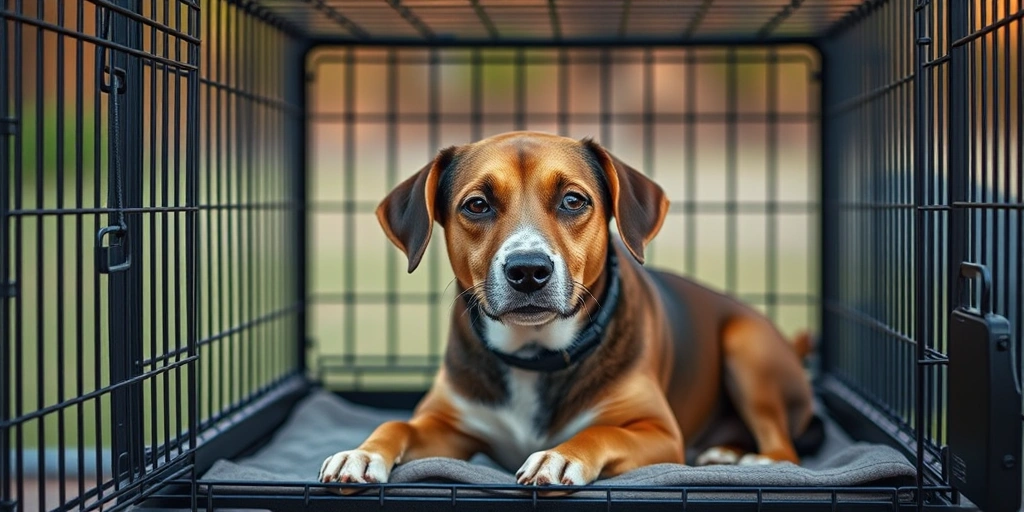
The Compassionate Guide on How to Crate Train a Dog with Anxiety: Turning Fear into a Safe Haven
Estimated Reading Time: 7 Minutes
Key Takeaways for Crate Training an Anxious Dog
- The process must be entirely choice-based, using desensitization and counter-conditioning. Never force an anxious dog into the crate.
- The crate must predict only profound, sustained relief and High-Value Treats (HVT). All meals and HVT should be consumed inside.
- Optimize the environment by using a dark cover and placing the crate in a highly social area initially to prevent association with isolation.
- When closing the door, timing is critical: always open the door *before* distress occurs, and *only* when the dog is quiet, even for a momentary pause.
- If the dog is only anxious when you leave, the root cause is likely separation anxiety. Treat this complex behavioral issue concurrently, as the crate is not a standalone cure.
Mastering the Art: How to Crate Train a Dog with Anxiety Using Desensitization
For many dog owners across the USA, the crate is a vital tool—a necessity for travel, house-training, and providing a reliable safe space. But what happens when the crate itself becomes an Anxiety Trigger? If you are struggling with how to crate train a dog with anxiety, you are dealing with a challenge that requires patience, precision, and a fundamentally different approach than training a typical puppy. Effective crate training fearful dog protocols avoid force entirely. Forcing an anxious or claustrophobic dog into a crate often leads to severe crate aversion, exacerbating existing stress and deepening underlying Dog Behavior Problems. If you are dedicated to learning how to crate train a dog with anxiety, patience is paramount.
At Chill Dog Zone, we understand that true solutions come from compassion and science-backed techniques. This comprehensive guide, based on detailed behavioral research, will walk you through the essential process of desensitization and counter-conditioning, transforming the crate from a source of panic into your dog’s most cherished safe haven. The core mission is making crate safe space for emotional regulation.
Why Anxious Dogs Require a Specialized Approach
Standard crate training often relies on the dog eventually settling down, but for dogs exhibiting generalized anxiety, past trauma, or early signs of separation distress, confinement feels like punishment, not security. Our goal is to radically shift the dog’s emotional response. The crate must predict only one thing: profound, sustained relief and high-value rewards.
If your dog displays signs of anxiety around the crate—such as lip-licking, excessive yawning, pacing, heavy panting, or desperate scratching—they are signaling high emotional arousal. Continuing training during these episodes only reinforces the fear. Success in how to crate train a dog with anxiety is measured not in how long they stay inside, but how calm their emotional state remains throughout the process.
The Mental Shift: Choice and Association
The most crucial commitment you must make is to never force your dog into the crate. The process must be entirely choice-based. If your dog exhibits any signs of distress, immediately stop the session, reset, and return to the previous step where they felt comfortable. Commitment is key when learning how to crate train a dog with anxiety based on choice.
This relies on the Rule of Association: the crate must only predict good things. This means all meals, high-value chews (HVT), and special toys must be delivered inside or near the crate.
Preliminary Steps: Setting the Stage for Success
Before you even begin asking your dog to enter the crate, the environment must be optimized to reduce Anxiety Triggers. This is foundational, whether you are dealing with Large Dog Breeds Anxiety (which may feel more confined) or Small Dog Breeds Anxiety (which may feel more vulnerable). These steps lay the groundwork for understanding how to crate train a dog with anxiety successfully.
The specialized needs of crate training fearful dog mean the environment must be optimized to reduce Anxiety Triggers.
1. Crate Selection and Location (Creating the Den)
For an anxious dog, the crate must mimic a safe, dark den.
- Location is Key: Initially, place the crate in a highly social area, such as the living room or family den. A common mistake is placing the crate immediately in a bedroom or laundry room, which instantly associates the crate with isolation—a massive trigger for Dog Anxiety. The goal is presence, not isolation. We must focus on making crate safe space through location and comfort.
- The Power of Darkness: Use a wire crate, but always drape it with a dark cover (a blanket or a commercially available crate cover). This reduces visual stimuli that can trigger anxiety and panic, helping your dog feel securely hidden.
- Comfort and Scent: Ensure the crate contains soft bedding, blankets, or, ideally, an old shirt or blanket carrying the owner’s scent. Caution: If your dog panics, they may attempt to chew or ingest bedding. If this happens, use a crate pad that cannot be easily torn up.
2. High-Value Treats (HVT) and Duration Building
High-Value Treats are non-negotiable in this training process. These are rewards your dog only gets during crate training, ensuring the crate maintains maximum positive predictive power.
- Examples of HVT for Duration: Frozen KONGs stuffed with peanut butter, yogurt, or wet food; soft cheese; hot dogs; or bully sticks.
- The Strategic Benefit: Long-lasting chews require the dog to maintain a sustained period of focus inside the crate, which is the cornerstone of building positive duration. This counter-conditioning replaces feelings of fear with focused enjoyment.
The Gradual Introduction Protocol: Desensitization in Action
This protocol is non-linear. Understand that progress will be measured in seconds of comfort, not minutes, and you may need to repeat steps many times. Consistency and adherence to your dog’s emotional state are more important than speed. Before starting the protocol, understanding how to crate train a dog with anxiety effectively requires patience.
Step 1: Neutral Introduction and Exploration
The objective here is to make the crate furniture—just another piece of equipment that holds no danger.
- Action: Prop the door wide open, or remove it entirely if possible. Avoid mentioning the crate or using commands.
- Scattering Treats: Scatter low-value treats (kibble) around the crate. As your dog shows curiosity, scatter them immediately next to the entrance.
- Goal: The dog must walk near the crate without suspicion or hesitation. Do not cue, praise, or interact while the dog is exploring. Allow them to approach out of pure curiosity.
Step 2: The Treasure Hunt (Entry Association)
Now we introduce the concept of voluntary entry.
- Action: Start scattering treats just inside the entrance, requiring the dog to put just one paw in. As they comfortably retrieve the reward, gradually move the treats further back, until all four paws are required to enter.
- Key Technique: Maintain Silence: This is critical for anxious dogs. As the dog enters to retrieve the treat, remain silent. Do not praise, acknowledge, or even look at them until they have finished the reward and are exiting. Exciting human interaction can often trigger anxious energy. We want the crate to be associated with calm, independent consumption. The silence technique is especially important for successful crate training fearful dog interactions.
Step 3: Feeding and Prolonged Duration (Door Open)
Once your dog is entering easily, we must link the crate to the highest daily reward: food.
- Full Meals Inside: Begin feeding all meals inside the crate with the door wide open. Place the food bowl at the very back.
- Introducing Long Duration: Introduce the high-value, long-lasting chews (HVT). Present the frozen KONG or lick mat *outside* the crate, then place it inside the crate so the dog must enter to enjoy it. The dog remains inside while chewing with the door open. Once the chew is finished, they are free to leave without fanfare.
- Building Calmness: The time spent focused on chewing replaces anxious anticipation with a positive physiological state. This is a critical element in effective Anxiety Treatments & Remedies. This approach is central to understanding how to crate train a dog with anxiety effectively.
Step 4: The Door Closure (Micro-Sessions)
This is the most sensitive step, particularly for claustrophobic dogs. Precision and timing are paramount. If executed correctly, this step proves critical in learning how to crate train a dog with anxiety.
- The Action: Give the dog the high-value chew inside the crate. While they are happily distracted and focused on the reward, gently close the door for a very short duration—start with 1 to 2 seconds.
- Critical Timing: Immediately open the door before the dog finishes the chew or shows any awareness that the door is closed. The experience must be: door closed, door open, still chewing.
- Gradual Increase: Repeat this step multiple times per session (keep sessions short, 3-5 minutes). Slowly increase the closure time to 5 seconds, 10 seconds, 30 seconds, and eventually one minute. The dog must remain calm and focused on the chew the entire time.
- The Golden Rule of Release: NEVER open the door if the dog is actively whining, scratching, or pawing. This instantly rewards the anxious behavior. Wait for a momentary lapse, a brief pause, or 1-2 seconds of quiet breathing before opening the door. This reinforces quiet, calm behavior as the mechanism for release.
Step 5: Short Absences (Practicing Separation)
Once your dog is comfortable in the crate for 10-15 minutes with the door closed while happily chewing, you can introduce short absences. This is the final stage of the desensitization process for how to crate train a dog with anxiety.
- The Action: Close the door and give the HVT. Walk out of sight (e.g., around a corner or into the next room) for just 10 seconds. Return before the dog finishes the chew or shows signs of pre-panic (pacing, heavy sighing, or standing up).
- Calm Exits and Returns: Do not make a fuss when you exit or return. Calmness is key. A dramatic goodbye or a highly excited hello often triggers anxiety. Return calmly, let the dog finish the chew, and then release them calmly. This prevents the crate from being tied to the drama of your departure or arrival.
Troubleshooting Advanced Dog Anxiety & Behavioral Issues
Successfully integrating the crate into the life of an anxious dog requires anticipating related behavioral challenges. The techniques involved in how to crate train a dog with anxiety are challenging. The crate is a tool for containment and calm, but it rarely solves complex behavioral problems on its own.
The Myth of Crate Training as a Cure for Separation Anxiety
If your dog is only anxious when you leave (i.e., they are perfectly calm in the crate while you are present), the primary issue is likely separation anxiety, not generalized crate aversion. A specialized approach is necessary when learning how to crate train a dog with anxiety while managing separation issues.
Warning: Using the crate prematurely for a dog with separation anxiety can dramatically worsen the condition, sometimes leading to severe injury as the dog attempts to escape.
The Solution: Focus on treating the root cause of separation anxiety concurrently with crate training. This requires specialized counter-conditioning that addresses the dog’s panic at isolation. Consult a certified professional dog trainer (CPDT-KA) or a veterinary behaviorist if separation anxiety is suspected.
Integrating Calming Aids and Supplements
To lower your dog’s anxiety threshold during the intense training phase, supportive measures can be immensely helpful. Supportive measures are often crucial during the journey of how to crate train a dog with anxiety.
- Pheromone Therapy: Utilize canine synthetic pheromone diffusers (e.g., Adaptil). Place the diffuser near the crate to provide a continuous feeling of safety.
- Sound Therapy: Classical or specially designed canine music playlists can significantly lower environmental stress.
- Nutrition & Supplements: Discuss with your veterinarian incorporating calming supplements (often containing L-Theanine, L-Tryptophan, or hydrolyzed milk proteins) to reduce overall stress levels, making them more receptive to training.
It might seem unrelated, but success in how to crate train a dog with anxiety can often lead to improvements in other Dog Behavior Problems. A dog that learns self-soothing and relaxation in the crate often generalizes this calm state.
- Excessive Barking: Much Dog Excessive Barking is rooted in reactivity and underlying anxiety. Teaching a dog to settle quietly in a dark, den-like space reduces hyper-vigilance, often resulting in quieter behavior overall.
- Jumping on People: Similarly, high arousal behaviors like Jumping on People often decrease when the dog learns to successfully self-regulate their emotional energy during structured rest periods. Crate training fearful dog strategies focus on teaching independent calm.
Lifespan Considerations: Puppy vs. Senior Dog Behavior
The core principles of how to crate train a dog with anxiety apply universally, regardless of age, though context changes:
- Puppy Behavior Issues: Anxious puppies benefit greatly from early positive association. Never use the crate as punishment for puppy accidents or nipping, as this immediately creates aversion.
- Senior Dog Behavior: Senior Dog Behavior changes can include new anxieties due to cognitive decline or loss of vision/hearing. For senior dogs, the crate becomes even more crucial as a predictable, safe space when the world feels confusing. Ensure the crate is easily accessible and doesn’t require jumping. This emphasis on making crate safe space applies regardless of age.
Practical Takeaways and Chill Dog Zone’s Dos and Don’ts
Crate training an anxious dog is a marathon, not a sprint. This guide to how to crate train a dog with anxiety requires commitment. Celebrate small victories—a moment of quiet focus on a KONG, or a comfortable return to the crate without cueing.
The Ultimate Dos and Don’ts
| DO | DON’T |
|---|---|
| DO use extremely high-value, long-lasting rewards (HVT). | DON’T use the crate as punishment or time-out. |
| DO stop the session immediately if your dog shows distress (panting, drooling, scratching). | DON’T leave collars, harnesses, or tags on your dog while crated (entanglement risk). |
| DO ensure the crate is covered and placed in a social area initially. | DON’T release the dog when they are whining or barking. Wait for a pause. |
| DO feed all meals inside the crate. | DON’T rush the process; progress is measured in seconds of calmness. |
| DO consult a CPDT-KA or veterinary behaviorist if panic behavior persists. | DON’T make a big fuss upon exit or return. Keep interactions calm. |
The journey of how to crate train a dog with anxiety is an opportunity to deepen your bond based on trust and safety. By prioritizing their emotional well-being through desensitization and counter-conditioning, you are providing them with a critical life skill—the ability to find safety and solace even in confinement. This skill is invaluable for reducing overall Dog Anxiety and enhancing their quality of life. Understanding how to crate train a dog with anxiety successfully creates lasting comfort.
Frequently Asked Questions (FAQ)
Training an anxious dog is highly variable. Unlike training a typical puppy, progress is measured in seconds of comfort, not minutes. It is crucial to move at the dog’s pace. This specialized desensitization protocol can take anywhere from a few weeks to several months, depending on the severity of the underlying anxiety or trauma. Consistency and patience are far more important than speed.
Absolutely not. For an anxious dog, the crate must maintain 100% positive association. Using it as a punishment or time-out tool immediately breaks the trust you are trying to build and reinforces the idea that confinement is associated with bad feelings or isolation. If your dog needs to calm down, gently redirect them to a low-stimulation area (like a tethered bed or mat) but never use the crate for correction.
The golden rule is never release the dog while they are actively panicking, whining, or scratching. If you release them during distress, you instantly reward and reinforce the anxious behavior as the successful method for escape. Wait for a moment of quiet (even just 1-2 seconds of calm breathing) before opening the door, reinforcing calm behavior as the key to freedom.
A wire crate, when properly covered with a dark, opaque blanket, is often ideal. The dark covering provides the necessary den-like feeling, reducing visual stimuli that can exacerbate anxiety. However, the wire structure offers superior ventilation compared to most plastic (airline style) crates, which is important as anxious dogs often pant and overheat. The key is the covering, ensuring a sense of secure darkness.