
Mastering Reactivity: A Comprehensive Guide to BAT Training for Dogs for Anxiety-Free Living
Estimated Reading Time
9 minutes
Key Takeaways
- BAT Training (Behavior Adjustment Training) is a force-free, research-backed protocol designed to address fear and frustration in reactive dogs.
- The core mechanism relies on the Functional Reward: the dog learns that choosing calm disengagement (turning away from a trigger) results in increased distance or space.
- Successful implementation requires finding the dog’s behavioral threshold—the distance at which they can observe a trigger without reacting defensively.
- BAT training emphasizes empowerment, teaching the dog that they have control over their environment, thereby reducing their reliance on the owner to manage their fear.
- Consistency and patience over several months, paired with environmental management and holistic support (health checks, nutrition), are crucial for lasting change.
Introduction to BAT Training
Welcome to Chill Dog Zone, your trusted resource for navigating the complexities of canine behavior. We know that owning a reactive dog—one who barks, lunges, or panics on walks—can turn what should be a joyful partnership into a source of stress and embarrassment. For years, traditional dominance or punishment-based methods failed to provide lasting, compassionate results, often worsening underlying Dog Anxiety. But the science of behavior has evolved, offering sophisticated, force-free behavior modification protocols that prioritize your dog’s emotional well-being.
Today, we are diving deep into one of the most effective, research-backed training methods available for resolving fear, frustration, and reactivity: BAT training for dogs, otherwise known as Behavior Adjustment Training. This methodology, developed by certified behavior consultant Grisha Stewart, offers a powerful, compassionate solution that empowers your dog to make calm, positive choices when faced with Anxiety Triggers. If you are tired of avoiding walks or constantly managing severe Dog Behavior Problems, understanding and applying Behavior Adjustment Training (BAT) can truly transform your relationship with your canine companion.
This comprehensive guide will break down the philosophy, the mechanics, and the practical steps of using BAT training, positioning Chill Dog Zone as your authority in compassionate Anxiety Treatments & Remedies.
What is BAT Training for Dogs? A Compassionate Approach to Reactive Dog Solutions
BAT training for dogs is not just another obedience trick; it is a specialized training protocol designed to improve a dog’s emotional response to fear- or frustration-inducing stimuli. Its primary goal is to change how the dog feels about the environment and the things in it—whether that’s other dogs, strangers, loud vehicles, or specific situations like the vet’s office.
Unlike older methods that attempted to suppress the behavior (e.g., jerking the leash when the dog barks), Behavior Adjustment Training (BAT) focuses on addressing the root cause: the underlying stress or fear. It utilizes classical and operant conditioning techniques to build confidence and offer the dog functional alternatives to reacting aggressively or anxiously.
The Core Philosophy: Empowerment and Functional Rewards
The fundamental difference between BAT and standard counter-conditioning is the concept of the Functional Reward.
- Traditional Counter-Conditioning (Desensitization): The dog is shown the trigger (e.g., another dog) at a distance, and the owner immediately gives the dog a high-value treat (e.g., chicken). The goal is for the dog to associate the sight of the trigger with delicious food, changing the feeling from “scary” to “yummy.” This method works, but often requires constant maintenance.
- Behavior Adjustment Training (BAT): The dog is set up in a safe environment (the “set-up”) where they notice the trigger but are below their threshold (meaning they are aware but not yet reacting). If the dog looks at the trigger, remains calm, and then chooses to disengage (sniff the ground, turn their head, move away), the functional reward is granted.
What is that reward? Distance, space, or freedom. The dog is learning: “I see the scary thing, I choose to be calm, and my calm choice makes the scary thing go away.” This empowers the dog to control their environment safely and effectively, reducing their reliance on the owner to manage their fear.
Research Insight: According to Grisha Stewart, the creator of Behavior Adjustment Training (BAT), the protocol is based heavily on providing “functional reinforcement,” which is anything that acts as a consequence that increases the future frequency of the behavior it follows. For reactive dogs, the primary functional reinforcer is relief from the trigger or increased distance from the trigger (Source: Grisha Stewart, Behavior Adjustment Training 3.0: New Practical Techniques for Fear, Frustration, and Aggression, 2018).
Unpacking the Core Mechanism: How BAT Training for Dogs Rewires Anxiety Triggers
Successfully implementing Behavior Adjustment Training (BAT) requires precision in reading your dog’s body language and setting up the training scenario correctly. The goal is to keep the dog under the threshold—the invisible line where observation turns into reaction (lunging, full bark, panic).
1. Identifying the Optimal Distance (The Threshold)
Before training, you must find the distance at which your dog can observe the Anxiety Trigger (e.g., another dog) without exhibiting a stress response.
- Too Close: If your dog immediately stares, tenses, or pulls, you are too close. The dog is over threshold, and learning is impossible; only survival instincts prevail.
- The Optimal Distance: The dog notices the trigger but is relaxed enough to look away, sniff, or take a treat (though treats are usually secondary in BAT training). This is often called the “look-and-move-away” distance.
2. The BAT Set-Up
The structured set-ups of Behavior Adjustment Training are particularly effective for managing severe Dog Outdoor Anxiety.
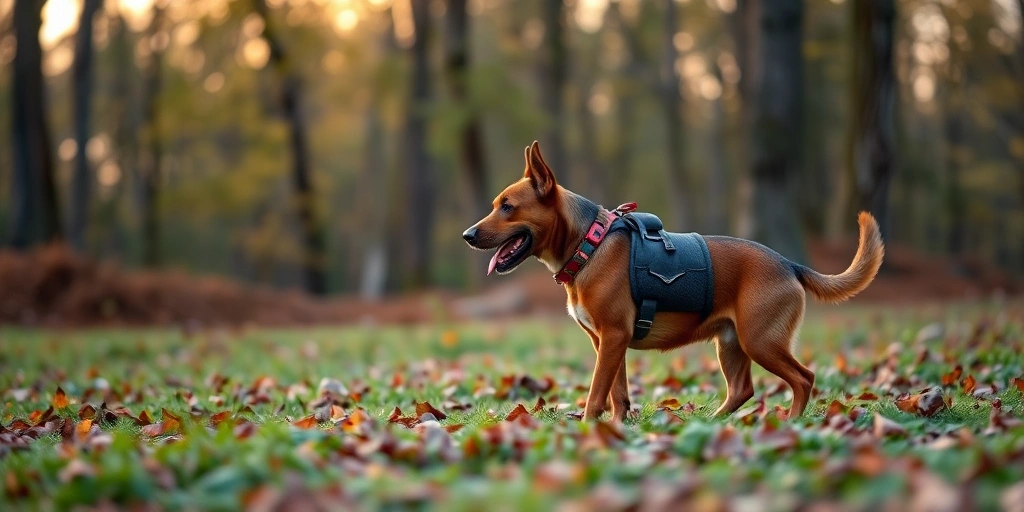
- Equipment: A lightweight harness (front-clip preferred for better control) and a long, lightweight line (10 to 15 feet). The long line is crucial as it allows the dog to manage their own distance without the owner having to drag or pull them.
- The Trigger/Decoy: You often need a “helper” or “decoy dog” or person (if the dog is reactive to people) who stands still or moves predictably.
3. The BAT Loop: Look, Mark, Move
This is the central process of the BAT training session:
- The Observation Phase: The dog is placed at the optimal distance. The trigger appears (or is already present).
- The Calm Choice: The dog notices the trigger (the “Look”) but remains relaxed. Critically, instead of escalating, the dog chooses to shift their gaze, move their body slightly, or turn away.
- The Mark & Functional Reward: As soon as the dog makes the slight move to disengage or relax, the handler uses a verbal marker (“Yes!” or “Good!”) and immediately walks further away from the trigger. The functional reward (the increased distance) confirms that the dog’s choice to disengage was successful.
The session ends before the dog has a chance to fail. Successive sessions involve slowly decreasing the initial distance, building up the dog’s confidence that they can handle closer proximity by using their coping strategy (disengagement).
Research Insight: According to behavioral experts, positive reinforcement training methods like BAT training are highly effective because they tap into the dog’s intrinsic motivation to feel safe and secure. The removal of the frightening stimulus acts as a potent negative reinforcement (R-), increasing the likelihood that the dog will perform the calm, distance-seeking behavior again in the future (Source: Certification Council for Professional Dog Trainers (CCPDT) Training Materials, 2023).
Step-by-Step Guide to Implementing BAT Training for Dogs at Home
Implementing Behavior Adjustment Training (BAT) requires patience, consistency, and a deep understanding of your dog’s stress signals. Here is a practical framework for incorporating this training into your routine.
Step 1: Baseline Assessment and Management
Before you begin a session, you must control the environment to prevent rehearsal of the unwanted behavior. Every time your dog practices lunging or barking, they get better at it (self-reinforcing).
- Identify All Triggers: What exactly causes the reaction? Is it men with hats, only large dogs, or fast-moving vehicles? Documenting this helps you set up accurate scenarios.
- Avoid Practice: During the initial phases, avoid all uncontrolled exposures. If you must walk in public, use extreme caution, walk at odd hours, or use visual barriers. Management is the foundation for successful reactive dog solutions.
Step 2: The Equipment and Setup
Ensure your equipment promotes safety and effective movement.
- Harness: Always use a non-restrictive harness.
- Long Line: Use a 10-15 foot training line (do NOT use flexi-leads). The long line allows the dog maximum freedom to choose distance without hitting the end of the leash and causing tension (which can heighten Dog Anxiety).
- Secure Environment: Find a quiet park, a large field, or a parking lot where you can safely set up a decoy trigger at a guaranteed distance.
Step 3: Conducting the Behavior Adjustment Training Session
The session should last only 5 to 10 minutes, maximizing the chance for successful, low-stress interactions.
- Start Far Away: Begin with the dog and trigger far enough apart that the dog is calm (often 50–100 feet initially).
- Wait for the Look & Turn: Let your dog observe the trigger. Wait until they look at the trigger and then voluntarily break their gaze, sniff, or turn away.
- Mark and Retreat: Immediately mark the behavior (“Yes!”) and gently encourage the dog to move one step further away. Let the line slacken and allow the dog to relax. This distance is the reward.
- Repeat: Once the dog is calm again, pause. If they are ready, you can take a step or two closer (if they are exceptionally calm), or repeat the process at the same distance.
- Finish Strong: Always end the session after a successful, calm interaction. Do not push your luck or continue until the dog becomes stressed.
Key Takeaway: Quality Over Quantity
If you get three calm “Look-and-Move-Away” repetitions in five minutes of BAT training, you have had a phenomenal session. This focused, low-stress work is far more valuable than a 30-minute session where the dog spends half the time slightly stressed.
Addressing Common Dog Behavior Problems with Behavior Adjustment Training (BAT)
While often associated with severe leash reactivity, the principles of empowerment and functional reinforcement inherent in BAT training for dogs can be applied effectively across many common Dog Behavior Problems.
Leash Reactivity and Dog Outdoor Anxiety
This is the classic BAT training use case. Dog Outdoor Anxiety often manifests as aggressive displays (lunging, barking) directed at perceived threats like passing dogs or people. Behavior Adjustment Training (BAT) directly targets this by teaching the dog that the solution to the stressful event is not an explosive display, but quiet disengagement. This technique is equally effective whether you are dealing with Large Dog Breeds Anxiety (where physical control is paramount) or Small Dog Breeds Anxiety (where the anxiety is often overlooked or dismissed).
Resolving Dog Excessive Barking (Triggered Barking)
If your dog engages in Dog Excessive Barking at the sight of neighbors, mail carriers, or people walking past the window, this is a form of boundary reactivity fueled by anxiety or frustration.
- The BAT Adaptation: Set up a safe observation spot (e.g., a window slightly covered). When the dog sees the trigger (mail carrier) but manages to look away or stays below the point of full-volume barking, reward them by taking them away from the window (the functional reward). This teaches them that calm observation leads to relief, rather than frustrated barking leading to temporary relief when the trigger leaves.
Calming Arousal and Stopping Jumping on People
Some dogs that display Jumping on People are not necessarily dominant, but are overly aroused, anxious, or frustrated by the inability to greet or control a social interaction.
- The BAT Adaptation: Use the “set-up” to introduce a helper person. If the dog is calm while the person stands at a distance, the functional reward is the person taking one step closer (if the dog desires interaction) or the person turning their back (if the dog desires space). The dog learns to use a four-on-the-floor behavior to manage the social distance, rather than relying on jumping to release excitement or anxiety.
Adapting BAT Training for Dogs for Diverse Age Groups
- Puppy Behavior Issues: Early exposure to different sounds, sights, and experiences using BAT’s low-threshold principle is key to prevention. Use the functional reward (space, sniff breaks) to reinforce a puppy’s curiosity without letting it turn into over-arousal or fear.
- Senior Dog Behavior: Older dogs may develop new anxieties due to failing sight, hearing, or pain. Behavior Adjustment Training (BAT) is ideal because it is low-impact and low-stress. If an aging dog is suddenly reactive to sounds, use distance and retreat (the functional reward) to rebuild confidence without putting physical strain on them.
The Holistic Picture: The Role of Environment, Nutrition & Supplements
While training protocols like Behavior Adjustment Training (BAT) are essential for addressing the behavior itself, sustainable long-term success in reducing Dog Anxiety requires a holistic approach that includes environment, physical health, and support through Nutrition & Supplements.
1. Optimize the Home Environment
- Reduce General Stress: Chronic, low-level stress can lower a dog’s behavioral threshold, making them more reactive. Ensure your dog has a predictable routine, a safe crate or “den,” and adequate mental enrichment (puzzles, chewing).
- Visual Barriers: If your dog is reactive to the outside world, covering windows (especially during peak traffic times) reduces constant exposure to Anxiety Triggers.
2. Physical Health and Pain Management
It is critical to rule out pain as a driver of reactivity. A dog that is suddenly guarding space, snapping, or reacting when touched may be doing so because of underlying arthritis, dental issues, or spinal discomfort. Always consult your veterinarian before starting a new behavior modification plan.
3. Supporting BAT with Nutrition & Supplements
Many owners find that incorporating calming agents can help raise the dog’s baseline threshold, making them more receptive to BAT training. These are Anxiety Treatments & Remedies that support the dog’s biochemistry, not quick fixes.
- Omega-3 Fatty Acids (Fish Oil): High-quality fish oil supports brain health and can help manage inflammation, which is tied to overall well-being.
- L-Theanine (Suntheanine): An amino acid found in green tea, often recommended for promoting relaxation without sedation. It works by increasing alpha brain waves, facilitating a calm, focused state, which can be highly beneficial before a BAT training session.
- Probiotics: Emerging research suggests a strong gut-brain axis, where gut health influences mood and stress response. High-quality dog-specific probiotics may help regulate anxiety.
Practical Advice: Consult your vet or a certified veterinary nutritionist before adding new supplements to ensure they are appropriate for your dog’s specific needs.
FAQs and Common Mistakes Dog Owners Make with Behavior Adjustment Training (BAT)
Q1: Is BAT only for dogs that look aggressive?
A: Absolutely not. Behavior Adjustment Training is for any dog exhibiting fear, frustration, or arousal when encountering a trigger. This includes the dog who hides, the dog who whines incessantly, or the dog who displays nervous Jumping on People. The core principle is teaching the dog a constructive way to handle stress.
Q2: Why can’t I use food treats as the main reward?
A: You can use treats, but they are generally secondary. The functional reward (distance/space) is what truly addresses the underlying anxiety. If you only use treats, you might teach your dog to happily look at the scary trigger to get chicken, but you haven’t necessarily taught them how to cope when the chicken runs out or when the trigger gets too close. The functional reward teaches the dog, “You have the power to make the scary thing less scary.”
Q3: I tried BAT, but my dog just froze/stared. What went wrong?
A: If your dog is staring intensely or freezing (“whale eyes,” tense body), they are likely over threshold, even if they aren’t barking. Freezing is a major stress response. The solution is simple: Increase the distance immediately. If you continue, you are reinforcing the idea that they are trapped near the scary thing.
Q4: How long does it take to see results?
A: Behavior modification is not linear. Some dog owners see minor improvements in the first few weeks, particularly with reduced Dog Excessive Barking. However, true emotional change takes time. Consistent, low-stress BAT training sessions performed over several months are usually required for lasting change. Patience and avoiding rushed sessions are non-negotiable.
Q5: When should I call a professional BAT trainer?
A: If your dog has ever caused injury, if their reactivity is unpredictable, or if you feel overwhelmed and unable to reliably identify the threshold, contact a certified professional dog trainer (CPDT-KA) or a certified behavior consultant (CBCC-KA) who specializes in force-free and Behavior Adjustment Training methods. Their expertise in safe set-ups and handling the long line is invaluable, especially when managing Large Dog Breeds Anxiety where control is paramount.
Conclusion: Empowering Your Dog to Choose Calm
BAT training for dogs offers a profoundly humane and highly effective path toward resolving even the most ingrained Dog Behavior Problems fueled by anxiety. By shifting the focus from controlling the dog’s outburst to empowering the dog to choose calm disengagement, you are giving them the most valuable tool of all: confidence.
At Chill Dog Zone, we believe that every dog deserves to live an anxiety-free life, and every owner deserves a relationship built on trust, not tension. Whether you are addressing severe Dog Outdoor Anxiety, minor Puppy Behavior Issues, or the nuances of Senior Dog Behavior, embracing the compassionate principles of Behavior Adjustment Training (BAT) will transform your daily walks from a struggle into a peaceful partnership. Start slow, be consistent, and watch your dog’s confidence blossom.